Foot Health Guide

Yellow Toenails: 6 Real Causes (Not Always Fungus) & What To Do

The internet wants you to assume yellow toenails mean fungus. The reality is messier — five of the six causes have nothing to do with fungal infection at all, and treating the wrong one wastes months. Here is how to read the signs honestly.

Updated June 2026 9 min read Rockville, MD

30-second triage

  • Yellow + thickened + crumbling? Likely fungus (onychomycosis).
  • Yellow only on the surface, smooth nail? Probably polish stain.
  • Yellow + pitted dimples on surface? Often nail psoriasis.
  • Yellow plus swollen ankles / chronic cough? See a doctor — could be Yellow Nail Syndrome.
  • Yellow only on one nail after stubbing it? Subungual hematoma; will grow out.
  • Yellow + smoker / older adult? Often age-related discoloration alone.

The Six Causes, In Order of How Often We See Them

In a typical week at our Rockville studio, the breakdown is roughly: fungus (40%), polish stain (25%), age-related (15%), trauma (10%), psoriasis (8%), systemic causes (2%). Knowing where you fall changes everything.

01

Onychomycosis (Toenail Fungus)

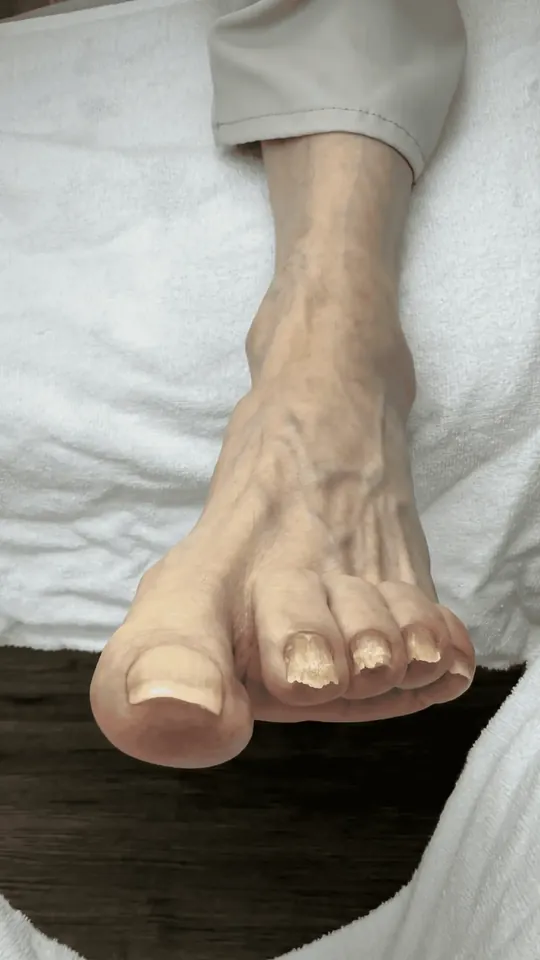
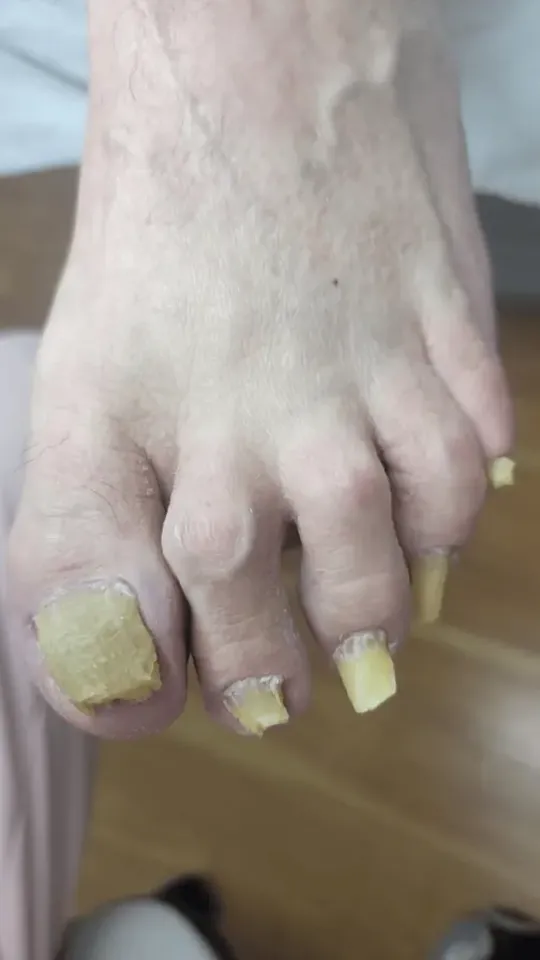
Tells: yellow that starts at the tip or side and creeps backward, nail thickens noticeably, edges crumble, faint sour smell, often spreads to neighboring nails.

Caused by dermatophytes — microscopic fungi feeding on keratin. Treatment requires both mechanical clearance of the infected nail bulk and a prescribed antifungal. Topical creams alone almost never penetrate thick nails. See our Toenail Fungus Solution page for how the mechanical side works, or book a podology consultation first if you are unsure.

02

Nail Polish Stain

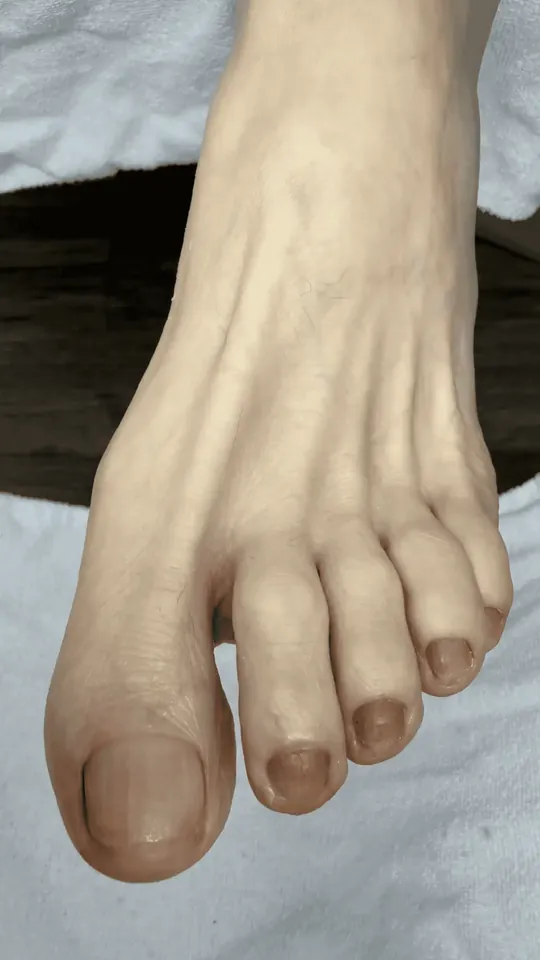
Tells: nail is smooth and normal thickness, yellow color is uniform across the plate, appeared after months of dark or red polish, no other symptoms.

Pigments — especially red, purple, and dark gel polishes — bind directly to the keratin and leach color in. A 6-week polish break usually solves it. Buffing accelerates it. Apply a clear base coat under colored polish to prevent recurrence.

03

Age-Related Discoloration

Tells: gradual yellowing on all toenails over years, no thickening, no crumbling, often paired with thicker or ridged plates.

Lipid deposits accumulate inside the nail plate with age, and nail growth slows from roughly 1.6 mm/month at 25 to 1.0 mm/month at 70. The discoloration is cosmetic and harmless. Regular podological maintenance keeps the surface clean and translucent.

04

Trauma & Subungual Hematoma

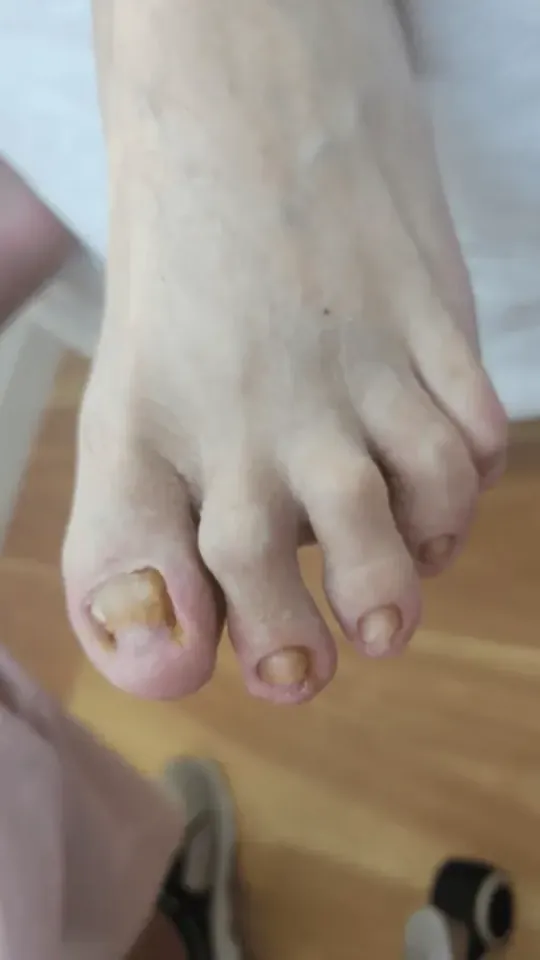
Tells: single nail, often the big toe; started after running, hiking, or stubbing it; may be black or purple first, then fades to yellow as it grows out.

Bleeding under the nail plate from blunt trauma. Almost universal in long-distance runners. The yellow patch advances toward the tip as the nail grows; full replacement of a big toenail takes 9–12 months.

05

Nail Psoriasis

Tells: yellow-orange patches that look like an oil drop under the nail, tiny pinprick pits on the surface, sometimes the nail lifts away from the bed.

Roughly half of people with skin psoriasis develop nail involvement. Often mistaken for fungus for years. Confirmed by a dermatologist; managed with topical or systemic psoriasis medication, not antifungals.

06

Systemic Causes (Rare but Real)

Tells: yellow on most or all nails plus other body symptoms — swollen ankles, chronic sinus issues, persistent cough, jaundiced skin, or diabetes.

Yellow Nail Syndrome is rare, classically pairs with chronic respiratory issues. Liver dysfunction, lymphedema, and uncontrolled diabetes can also yellow nails. Anyone in this category needs a primary-care evaluation — nail treatment alone will not fix the underlying problem.
How to Tell Which One Is Yours (Without a Lab)

Three questions narrow it down in under a minute:

Q1. Is the nail thicker than normal?

Yes → fungus, severe age, or psoriasis. No → stain, mild age, or trauma.

Q2. One nail or several?

One → trauma or focal fungus. Several → spreading fungus, polish stain, age, psoriasis, or systemic.

Q3. Is the surface smooth or pitted?

Smooth → stain, age, or trauma. Crumbly → fungus. Tiny pits → psoriasis.

What Not To Do

  • Do not paint dark polish over a yellow nail "just to cover it." If it is fungus, you have just created the perfect breeding environment.
  • Do not soak in bleach. Real story we hear weekly. It damages the nail matrix and does not kill fungus.
  • Do not file aggressively at home. Filing through to the nail bed creates an entry point for bacterial infection.
  • Do not keep buying new OTC creams every month. If two months of consistent use shows no improvement, the cream is not reaching the nail bed — you need mechanical clearance first.

Not Sure What Is Wrong With Your Nails?

A short in-person consultation tells you whether it is fungus, stain, psoriasis, or something else — without lab tests, without guesswork. We will not sell you a service you do not need.

Frequently Asked Questions

Do all yellow toenails mean fungus?
No. In our studio, only about 40% of yellow toenails are actually fungus. The other 60% are nail polish stain, age-related discoloration, trauma residue, psoriasis, or rarely a systemic condition. Treating fungus when it is something else wastes months and money.
Can I just keep painting over them?
Only if you are sure it is a polish stain. If there is any chance of fungus, painting seals moisture against the nail plate and accelerates the infection. Always confirm what you are dealing with before covering it.
How long does a yellow toenail take to grow out?
A big toenail fully replaces itself in roughly 9–12 months; smaller toes in 5–7 months. So even after the underlying cause is resolved, expect the visible yellow to grow out gradually.
Will Vicks VapoRub really cure fungus?
A small 2011 study found that the active oils in Vicks (thymol, menthol, eucalyptus) showed improvement in roughly 56% of mild cases over 48 weeks. It is cheap and harmless, so it is worth trying for mild surface fungus on thin nails. It will not penetrate a thick, advanced nail — you need mechanical clearance first.
When should I see a doctor instead of a foot-care studio?
See a doctor first if you have diabetes, the yellow appeared with swollen ankles or breathing problems, the nail is painful or red around the edges, you want a confirmed fungal-culture diagnosis, or you are considering oral antifungal medication.
Do you treat yellow toenails in Bethesda or Gaithersburg?
Our studio is in central Rockville, MD, a short drive from Bethesda, Gaithersburg, and Silver Spring. We see clients from across Montgomery County every week.

Reviewed by: MedPedicure Center editorial team — licensed cosmetic foot-care specialists, Rockville, MD.

Disclaimer: Educational content, not medical advice. We are a cosmetic foot-care studio. Persistent, painful, or systemic symptoms should be evaluated by a licensed podiatrist, dermatologist, or primary-care physician.