
Reviewed by Iryna Mozghovenko · Updated October 2026
Short answer: a medical pedicure (often called a “medi pedi”) is foot care that focuses on the health and comfort of your feet rather than polish. A trained specialist works on dry skin with sterile podology e-files to thin thick nails, reduce calluses and corns, smooth cracked heels and ease pressure from ingrown nail edges, without soaking your feet in a shared basin.
- Who performs it
- At our studio: licensed nail specialists trained in podology techniques. Not doctors.
- Water
- None. The work is done on dry skin, with no foot bath.
- Tools
- Podology e-files, instruments sterilized in a Class B autoclave and kept in sealed pouches opened in front of you. No blades.
- How long
- About 60 minutes for a Wellness Pedicure, 60–90 minutes for a Medi Pedicure, one specialist from start to finish.
- Cost at our studio
- Wellness Pedicure $140 · Medi Pedicure from $160 (+$30–50 or +$50–75 for more complex feet). All prices
- How often
- Every 4–8 weeks for most people; diabetic clients usually every 6–8 weeks.
- Insurance
- Not covered: it is cosmetic foot care, paid out of pocket.
Medical Pedicure vs. Regular Salon Pedicure
Both make your feet look better, but they are built for different goals. A salon pedicure is about polish and relaxation. A medical pedicure is about nails and skin that stay healthy and comfortable.
| Regular salon pedicure | Medical pedicure | |
|---|---|---|
| Main goal | Polish, relaxation | Healthy, comfortable nails and skin |
| Water | Feet soaked in a basin | No soaking (waterless) |
| Tools | Clippers, files, sometimes blades | Sterile podology e-files, no blades |
| Thick nails, calluses | Usually surface work only | Thinned and reduced in thin, controlled layers |
| Diabetic feet | Shared baths and blades are a real risk | Designed for routine diabetic care |
| Appointment | Often short | About 60–90 minutes, one specialist |
| Polish | The main event | Optional; many clients skip it |
| Price | Lower | Higher: $140–$160+ at our studio |
Why no water? Soaking softens and swells the skin, which hides how much callus really needs to come off. Dry skin shows its true structure, so the specialist removes exactly what needs removing and never over-thins healthy tissue. More on the waterless pedicure technique.
What Happens During a Medical Pedicure
You stay seated the whole time. At our studio a visit follows this order:
- Assessment and cleansing. The specialist cleanses your feet with professional podology solutions and checks your skin, nails and pressure areas. Tell us about diabetes, blood thinners or recent changes, so the depth of work can be adapted.
- Nails. Nails are trimmed and shaped to help prevent ingrowth. Thick nails are thinned painlessly with an e-file instead of being forced with clippers.
- Skin. Calluses and corns are reduced in thin layers, with a protective margin always left in place. Cracked heels are smoothed. No blades are used at any point.
- Finishing. A protective cream or foam, plus advice on footwear and home care. Polish is optional.
Before your visit: remove any gel polish, bring open-back or slip-on shoes for afterward, and bring a list of foot medications or recent podiatrist notes if you have them.
What a Medical Pedicure Can Help With
- Thick or hard-to-cut toenails — thinned and shaped with an e-file. See why toenails get thick.
- Calluses and corns — reduced in controlled layers, without blades. See callus removal.
- Dry, cracked heels — deep fissures smoothed; severe cases may need 2–3 sessions. See cracked heels.
- Ingrown and curved nails — careful trimming for mild cases (see pedicure with an ingrown toenail), and non-surgical toenail braces for curved or recurring ones.
- Discolored or thickened nails — cosmetic thinning that improves appearance. It is not a cure: a suspected fungal infection should be diagnosed and treated by a doctor. See how we work alongside your treatment.
Who Should Get a Medical Pedicure?
- People with diabetes who want routine foot care without salon risks.
- Seniors and anyone who can no longer reach or trim their own toenails; adult children often book for a parent. See pedicure for seniors.
- Anyone with thick nails, recurring calluses or cracked heels that regular pedicures do not fix.
- People who avoid nail salons because of shared foot baths and tools.
- Anyone who feels embarrassed about their feet. Thick nails and hard skin are exactly what we work on every week.
Is a Medical Pedicure Safe for Diabetics?
For routine foot care, yes, when it follows a diabetic-safe protocol. The specific risks of a standard salon pedicure are shared water baths, blades and rushed trimming. A waterless, blade-free protocol removes those specific risks: no water contact, no blades or razors, sterile instruments opened in front of you, and unhurried 60–90 minute appointments.
If you have an open wound, signs of infection or severe neuropathy, see your physician first. More on our diabetic pedicure.
Does It Hurt? Risks and When Not to Book
A medical pedicure should not hurt. The specialist works only on dead, non-living tissue, using e-files with a cooling spray, and most clients feel relief from pressure right away. After deep callus work, the area can feel mildly sore.
The main risk with any pedicure is technique: filing too aggressively can leave skin tender. That is why calluses are reduced in thin layers with a protective margin left in place. Please see a podiatrist or physician before booking if you have:
- an open wound or ulcer;
- signs of infection: redness, warmth, pus or fever;
- a red, swollen or draining ingrown toe;
- a foot that suddenly changed shape or color, or new numbness.
How Much Does a Medical Pedicure Cost?
Prices vary by provider. At our Rockville studio the Wellness Pedicure (maintenance) is $140, and the Medi Pedicure for thick nails, calluses, corns and cracked heels starts at $160, plus $30–50 or $50–75 for more complex feet. Your specialist confirms the price with you before starting. Toenail braces start at $70, and a podology consultation is $60.
Insurance does not cover cosmetic foot care. There is no prepayment; payment is due at the end of the visit, by cash, credit or debit card, Apple Pay or Google Pay. See the full price list.
How Often Should You Get One?
Most clients come every 4–8 weeks for maintenance, and diabetic clients usually every 6–8 weeks, roughly in step with how fast nails grow. Deeply cracked heels may need 2–3 sessions, combined with hydration at home.
Medical Pedicure or Podiatrist?
A podiatrist (DPM) is a doctor: see one for pain, infection, wounds, a diagnosis or surgery. A medical pedicure is routine cosmetic care of nails and skin. Many people use both: a podiatrist for medical problems and a medical pedicure for regular maintenance in between. More in podiatrist or medical pedicure?
Real Results From Our Studio
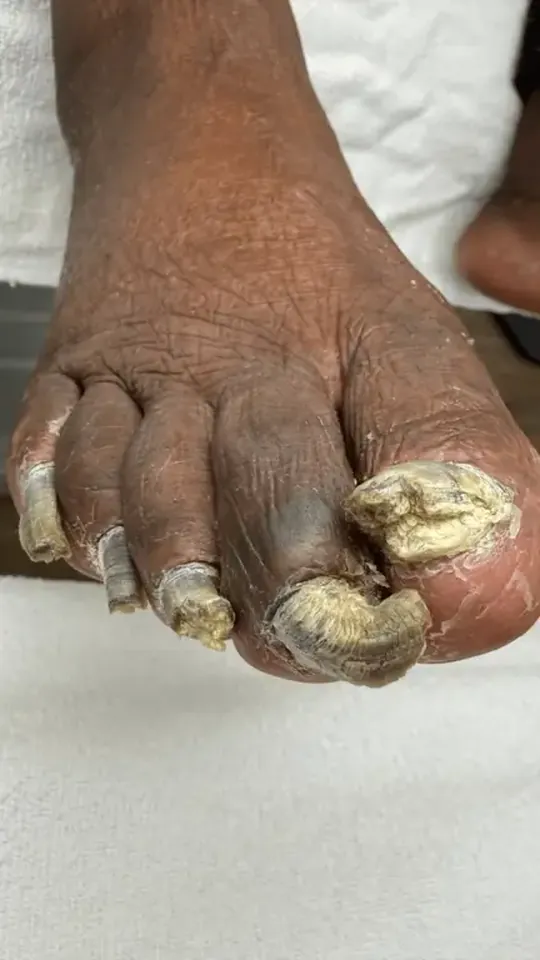
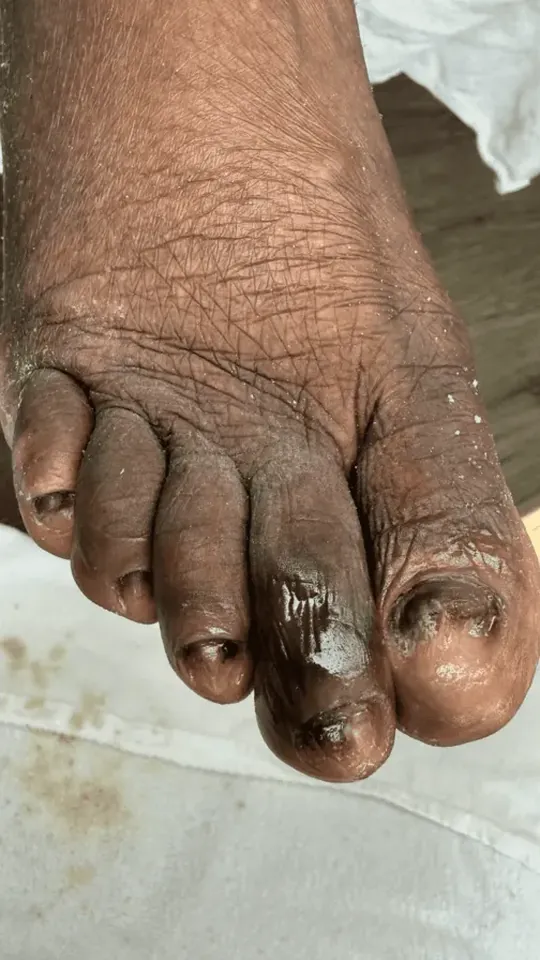
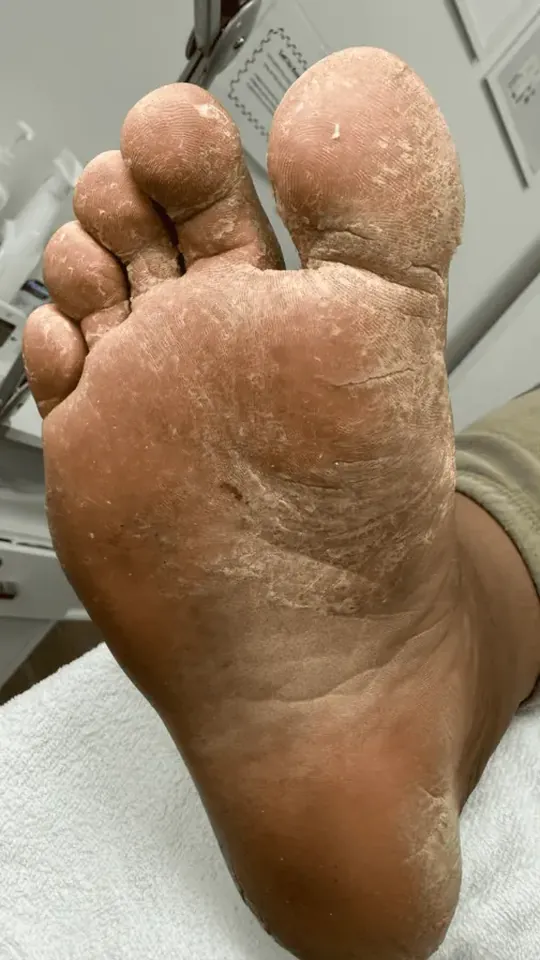
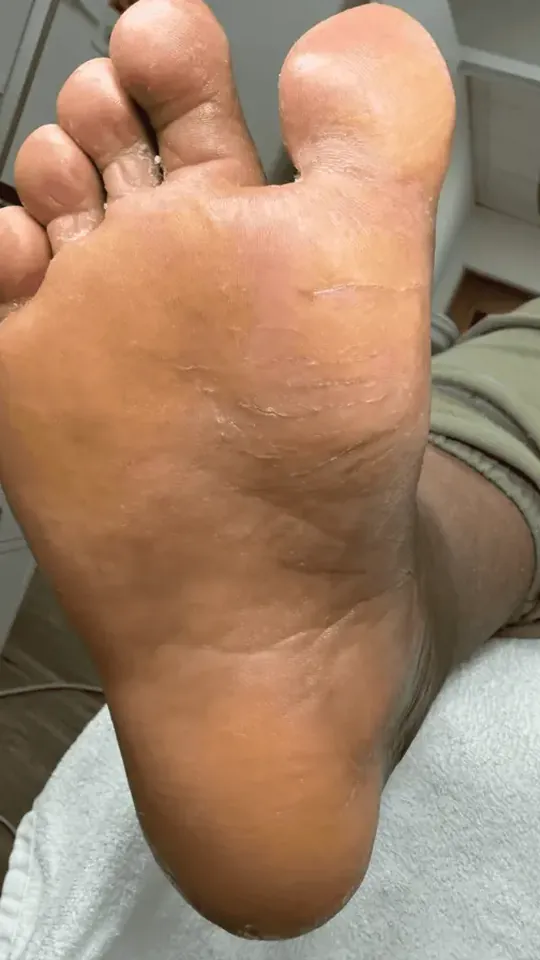
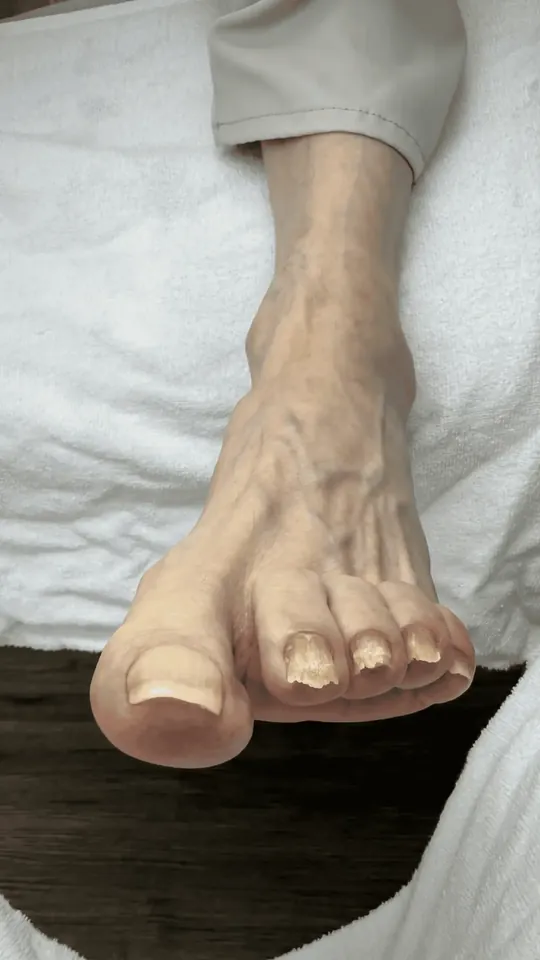
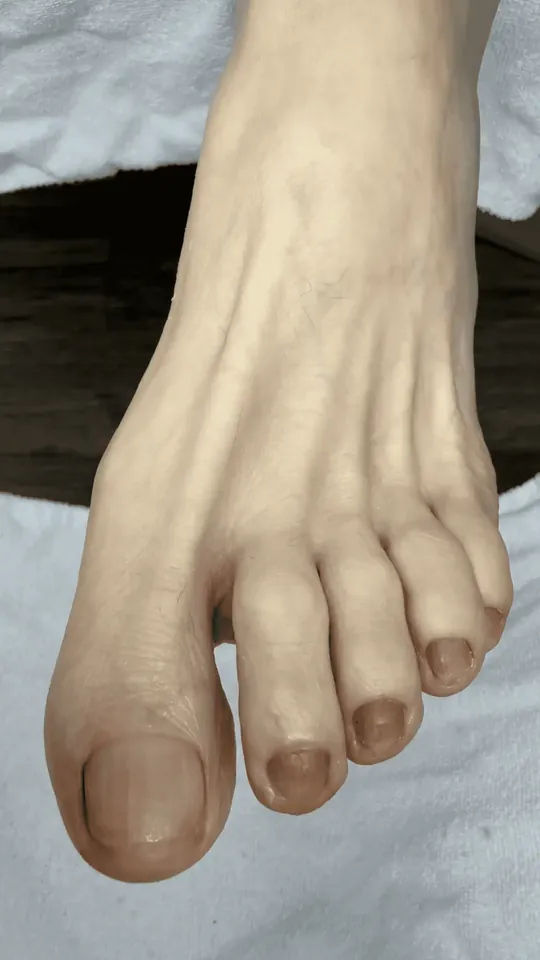
Every pair is a different client of our studio. More in the before & after gallery.
Frequently Asked Questions
Is a medical pedicure worth it?
Is a “medi pedi” the same as a medical pedicure?
Can I get polish after a medical pedicure?
How long do the results last?
Who performs a medical pedicure at your studio?
Can I book a medical pedicure for my parent?
About this guide. Written by the team at MedPedicure Center, a waterless foot-care studio in Rockville Town Square, Rockville, MD. Our founder, Iryna Mozghovenko, is a licensed nail specialist with more than 10 years of experience, trained in European podology. We provide cosmetic foot care, not medical treatment.
Book a medical pedicure in Rockville
Choose your specialist and time online. Most appointments are available within 1–2 weeks.
MedPedicure Center provides cosmetic foot care and does not diagnose, treat or cure medical conditions. For pain, infection, wounds or any condition that may need medical care, please consult a licensed podiatrist or physician.